

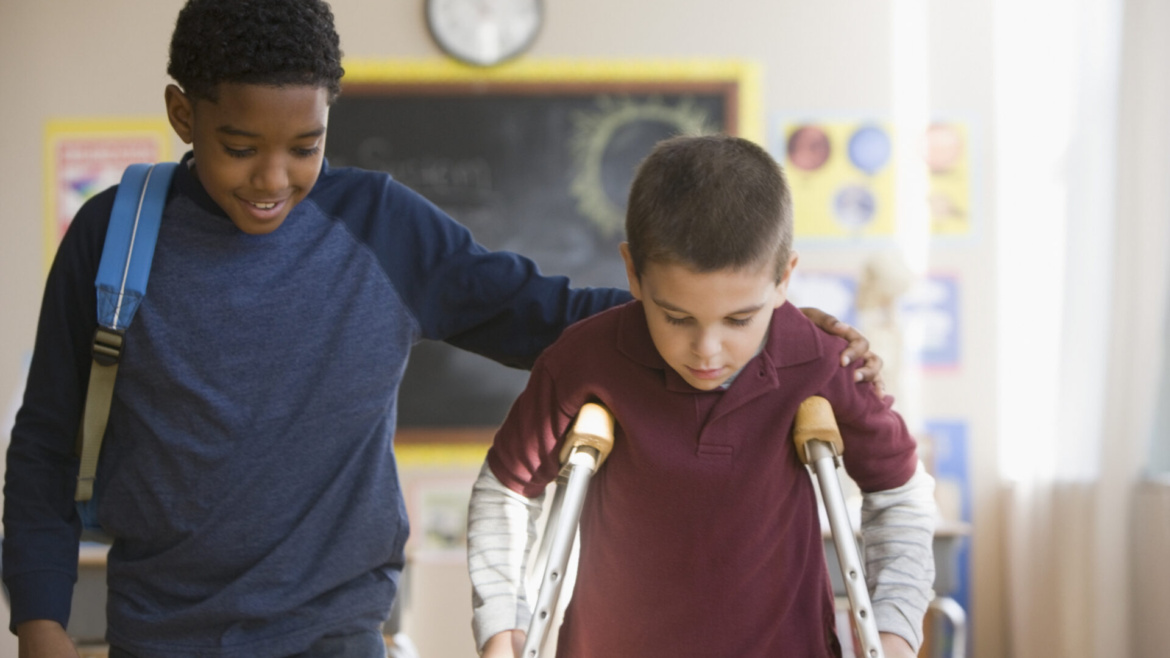
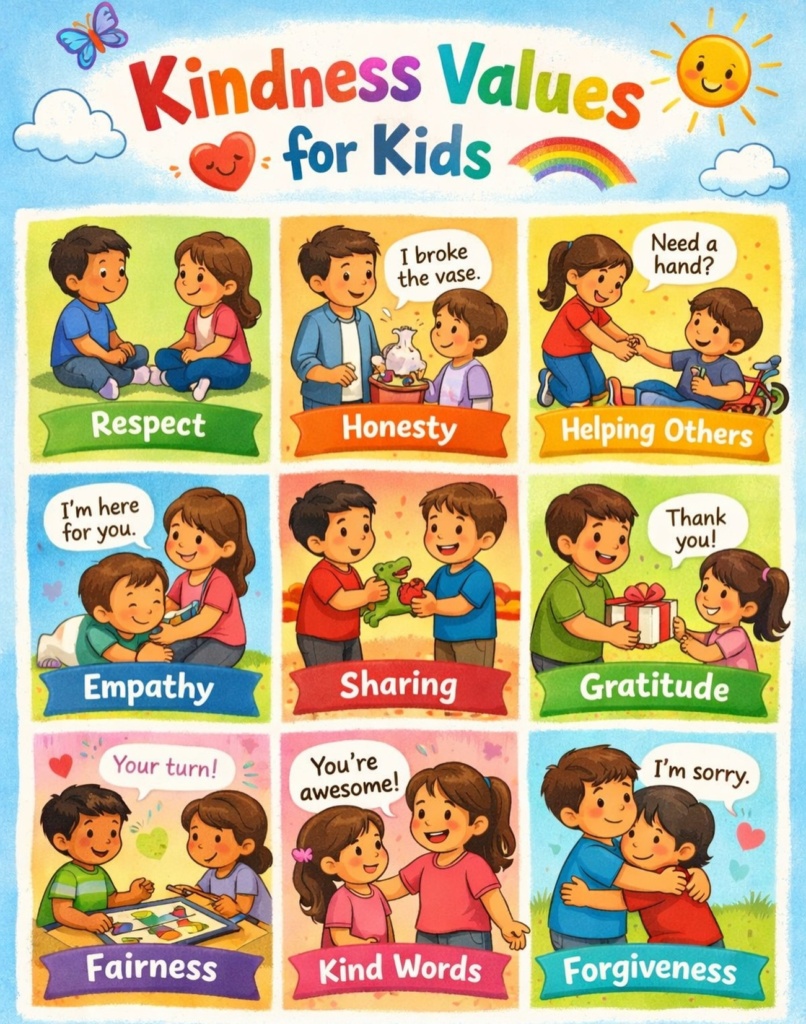
Empathy—the ability to understand and share the feelings of another person—is not an innate, unchangeable trait. It is a emotional and cognitive muscle. While children are born with the biological capacity for connection (thanks to mirror neurons), the actual skill of empathy must be intentionally modeled, practiced, and cultivated.
In a world increasingly focused on individual achievement and digital isolation, teaching kids to value others is one of the most profound pieces of emotional armor you can give them. Here is how to foster deep empathy in your child at every developmental stage.
The Three Layers of Empathy
To teach empathy, it helps to understand that it isn’t just a vague feeling. True empathy is made of three distinct components that develop over time:
1. Cognitive Empathy   ---> "I understand your perspective." (Thinking)
2. Emotional Empathy   ---> "I feel what you are feeling."   (Feeling)
3. Compassionate Action ---> "I want to help you."            (Acting)
4.
Your goal as a parent is to help your child move from simply noticing someone else’s state to actively caring and taking action to help.
1. Decode Emotions Through “Active Looking”
Children cannot empathize with feelings they don’t recognize. Building a robust emotional vocabulary is the first step.
- Use Books and Media: When reading a story or watching a movie, pause and look at the characters’ faces. Ask open-ended questions: “Look at his shoulders and his face. How do you think he is feeling right now?” or “Why do you think she made that choice? What was she worried about?”
- Label the Everyday: Don’t just focus on your child’s emotions; point out the emotional landscape of the world around them. “Look at that little boy at the park who dropped his ice cream. He looks really sad, doesn’t he?”
2. Eliminate “Empathy-Crushing” Language
Well-meaning parents often accidentally shut down empathy by trying to fix situations too quickly or minimizing big feelings.
- The Mistake: When a sibling or friend is crying, saying: “It’s not a big deal, stop crying,” or “Just give him the toy so he shuts up.”
- The Correction: Teach them to validate the emotion first, even if they don’t agree with the action. “Your brother is really frustrated right now because he wanted a turn. It’s hard to wait, isn’t it? Let’s figure out a solution together.”
3. Move from Charity to Solidarity (Compassionate Action)
Teaching kids to value others shouldn’t just happen during holiday food drives. It needs to be embedded into the rhythm of your household culture.
1.The Daily Observation Walk:Step 1: Notice.
Encourage your kids to look for people who might be feeling left out or overwhelmed. Ask them at dinner: “Did you notice anyone at school today who looked like they needed a friend or a smile?”
2.The ‘What If’ Exercise:Step 2: Brainstorm.
Put your child in the other person’s shoes to build perspective: “If you were the new kid in class and didn’t know where to sit at lunch, what would you want someone to do for you?”
3.Execute a Low-Stakes Act of Kindness:Step 3: Act.
Turn the thought into an immediate physical action. Have them bake cookies for a sick neighbor, write a thank-you note to the school custodian, or explicitly invite the lonely child to play a game of tag.
Age-by-Age Empathy Milestones
| Age Group | What Empathy Looks Like | How to Teach It |
| Toddlers (Ages 2–3) | They might offer a crying baby their own favorite teddy bear. They understand distress but assume others comfort exactly like they do. | Model it: Give your toddler a big hug when they are upset. They learn empathy by receiving it from you first. |
| Preschoolers (Ages 4–5) | They can link a person’s facial expressions to an emotion and understand basic cause-and-effect (“He is sad because his toy broke”). | Praise the kindness: Instead of just praising achievement, loudly praise empathetic choices: “I loved how you noticed your friend fell down and you stopped running to help her up.” |
| School-Age (Ages 6–10) | They can understand complex perspectives and realize that someone can feel two things at once (e.g., excited but nervous for camp). | The ‘I Wonder’ Game: Gently challenge judgments. If a classmate acts out, say: “I wonder if something tough happened at home before they came to school today.” |
The Ultimate Rule: You Are the Blueprint
Children are cultural anthropologists. They ignore what you say and ruthlessly mimic what you do.
If you want your child to value others, they need to watch how you treat the grocery store cashier, how you talk about unhoused people in your city, and how you react when someone cuts you off in traffic. If your daily actions demonstrate that other human beings have inherent worth, dignity, and complex internal lives, your children will naturally adopt that worldview as their own baseline.